
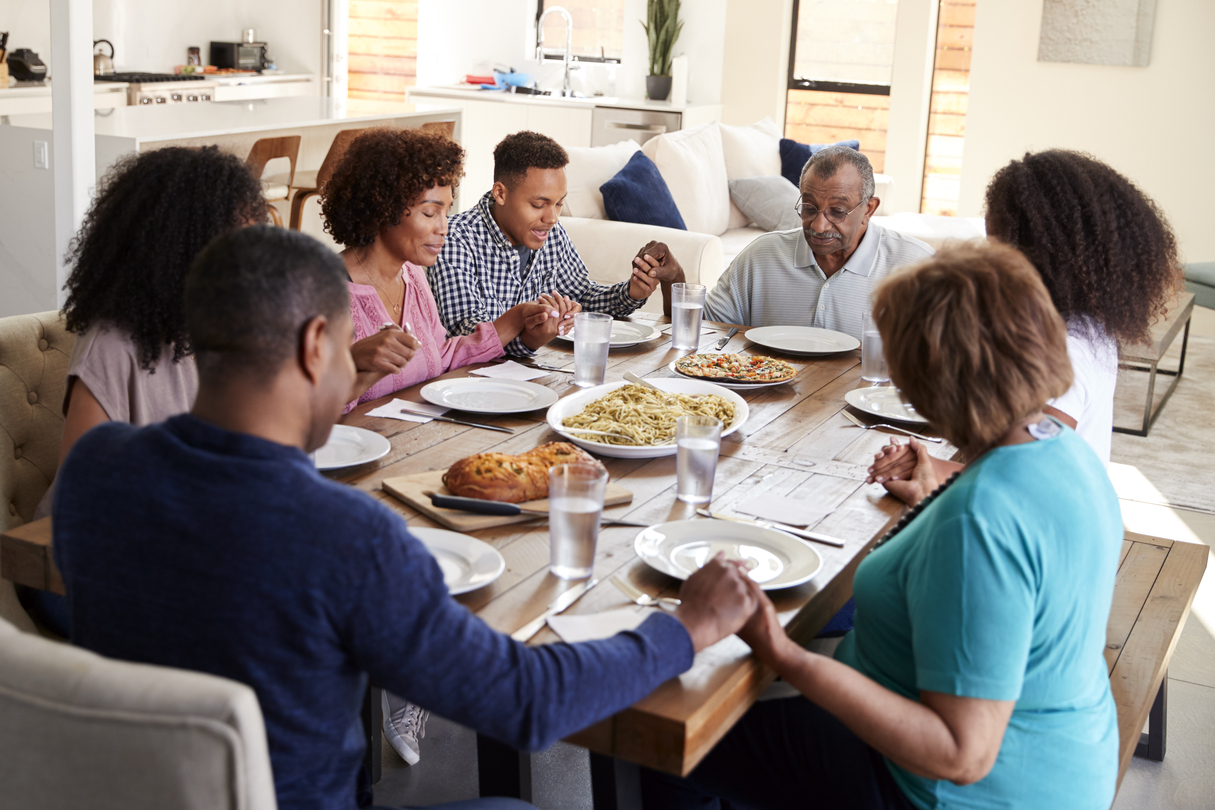
Haitian elders carry lives shaped by migration, faith, family, and resilience. An emerging study from Barry University asks what emotional well-being looks like for this community — in their own words.

Emerging research: This study is currently in progress. CFBH is featuring it here as part of our commitment to surfacing research that matters — including work that is still finding its answers.

Jinia Williams, M.S., LMHC, NCC — Ph.D. Candidate, Barry UniversityCollege of Health Professions and Medical Sciences · Supervised by Dr. George Vera · 2026

Think about what it means to grow old far from the place where you were born. You carry the language, the food, the prayers, the customs — all of it — into a country that does not always understand them. You age within systems — healthcare, social services, mental health — that were not built with you in mind. For Haitian older adults living in South Florida, this is not abstract. It is daily life. Yet the mental health of this community — how they feel, what gives them strength, what makes things hard — has been studied far less than it deserves. A doctoral study underway at Barry University is beginning to change that. Researcher Jinia Williams is using in-depth, story-based interviews to explore how Haitian and Haitian American older adults in South Florida understand and experience emotional well-being — on their own terms, in their own words. Why this community, and why nowSouth Florida is home to one of the largest Haitian communities in the United States. Many of these residents arrived decades ago — fleeing political instability, economic hardship, or natural disaster — and built lives here through enormous personal sacrifice. Those who came as young adults are now entering older age, and the same systems that were not designed for them then are still not designed for them now.

Approximately 14% of adults aged 70 and older live with a diagnosable mental health condition globally — yet mental health challenges in this age group remain among the most underrecognized and undertreated. Among older immigrant adults, barriers to care extend beyond availability. Language, cultural mistrust, stigma, and systems that do not reflect their values shape whether and how people seek support.

Haitian culture holds deep, specific values about aging. Elders are respected as sources of wisdom and moral guidance. Family and community are central. Faith — both Christian tradition and indigenous spiritual practice — shapes how people understand health, struggle, and healing. These are not footnotes to this community's experience. They are the foundation of it. Yet behavioral health research has largely treated Haitian older adults as part of broad categories — "immigrant populations," "minority elders" — rather than as a community with a distinct history, language, and way of understanding the world. What the research is askingWilliams' study uses narrative inquiry — a research method built around storytelling. Rather than asking participants to fill out a questionnaire or rate their symptoms on a scale, narrative inquiry invites people to tell their story. What has your life been like? What does emotional well-being mean to you? What gives you strength? Who do you turn to when things are hard? These are not clinical questions. They are human ones. For a community whose inner lives have rarely been the subject of careful, respectful academic attention, that distinction matters.

The study is exploring the following questions:1. How do cultural identity, migration history, and aging intersect to influence the emotional well-being of Haitian elders?2. What barriers do these elders face when trying to access mental health or social services, and how do these barriers impact their emotional health?3. What personal strengths, community connections, and cultural practices contribute to their emotional resilience?

The study will include seven to ten Haitian or Haitian American adults aged 65 and older who live in Miami-Dade, Broward, or Palm Beach counties. Interviews will be conducted in English, Haitian Creole, or both — a design choice that signals respect for how participants actually communicate, not just for how they can be most easily studied. The barriers that matterThe research is not only interested in what supports emotional well-being — it is equally focused on what gets in the way. For Haitian older adults, those barriers can be significant and layered.

LanguageLimited English can restrict access to services and make it harder to communicate distress in clinical settings.

StigmaMental health challenges are sometimes understood through spiritual frameworks that discourage engagement with Western clinical care.

MistrustHistorical experiences of discrimination and systemic exclusion shape how people relate to institutions and formal services.

AccessTransportation, cost, and a shortage of Creole-speaking providers create practical obstacles to care

None of these barriers is the fault of the individuals facing them. They are the result of systems that were designed without this community in mind. Research that names them clearly is the first step toward changing them.  Strength is part of the story, too.It would be easy to tell this story only through the lens of what is missing. But Williams' research is explicitly designed not to do that. Narrative inquiry centers on what people carry with them — and Haitian elders carry a great deal. Strong family networks. Faith communities that function as social anchors. Cultural traditions that honor age rather than dismiss it. A collective history of resistance and survival that stretches back to 1804, when Haiti became the world's first Black republic. These are not small things. They are the protective factors that research consistently finds matter most for emotional well-being in older age. The study seeks to understand how those strengths — faith, family, community, cultural identity — actually function in people's daily emotional lives. Not as categories on a checklist, but as living, breathing sources of meaning and resilience. Why it matters beyond South FloridaThe Haitian community in South Florida is the focus. But the questions this research asks matter far beyond a single zip code or population. How do we build mental health systems that actually serve people whose lives, languages, and cultural frameworks don't match the dominant assumptions those systems were built on? How do we train counselors and practitioners to show up with real cultural humility — not just awareness, but genuine responsiveness? And how do we make sure that older adults from immigrant communities are not invisible to the research that is supposed to inform their care?These are questions that the behavioral health field is still working to answer. Studies like this one are part of how that work gets done.

About this studyWilliams, J. (2026). Aging and Emotional Well-Being: A Narrative Exploration of Haitian Older Adults in South Florida. Dissertation Prospectus, Barry University College of Health Professions and Medical Sciences. Supervised by Dr. George Vera. Specialization: Marriage, Family, and Couple Counseling. Key frameworks cited in the study
  • Social Determinants of Health Framework — Centers for Disease Control and Prevention (2024); World Health Organization (2025).
  • Multicultural and Social Justice Counseling Competencies — Ratts et al. (2016).
  • Narrative Inquiry Methodology — Clandinin (2006); Connelly & Clandinin (1990).
 Demographic contextDain, B. & Batalova, J. (2023). Haitian Immigrants in the United States. Migration Policy Institute.World Health Organization. (2025). Mental Health of Older Adults.

Stay Informed

Receive the latest research, policy insights, and initiative updates from The Cummings Foundation for Behavioral Health — delivered directly to your inbox.


    Privacy Preference Center